

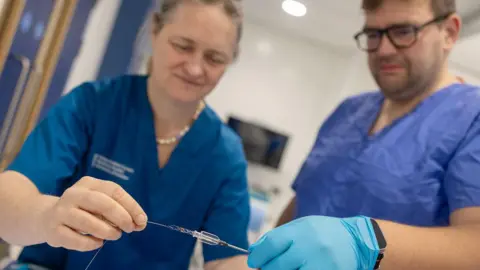
Surgeons from Scotland and America have successfully completed what is considered a world-first brain operation using automated systems.
The lead surgeon, from a medical institution, executed the remote thrombectomy - the removal of blood clots post a cerebral event - on a human cadaver that had been provided for research.
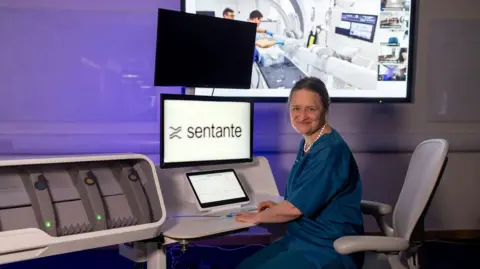
The professor was positioned in a major hospital in Dundee, while the subject undergoing procedure via the device was separately situated at the academic institution.
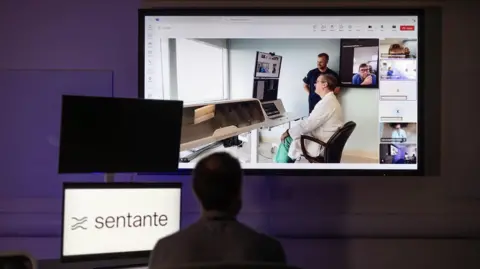
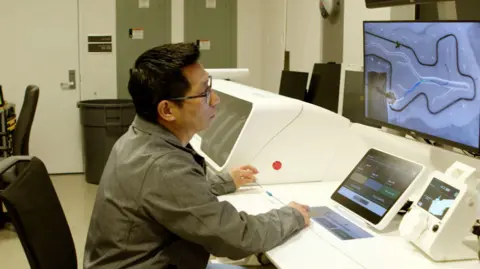
Hours later, a medical specialist from the American state utilized the equipment to conduct the first transatlantic surgery from his Jacksonville base on a human body in the Scottish city over significant distance away.
The research collective has described it as a potential "transformative advancement" if it becomes approved for medical treatment.
The medics consider this innovation could transform cerebral healthcare, as a delay in accessing specialist treatment can have a direct impact on the chances of recovery.
"The experience was we were observing the initial vision of the coming era," commented the medical expert.
"Whereas before this was thought to be science fiction, we showed that each phase of the procedure can now be performed."
The Scottish institution is the international education hub of the World Federation for Interventional Stroke Treatment, and is the only place in the United Kingdom where medical professionals can operate on cadavers with biological fluid pumped through the arteries to replicate operations on a actual patient.
"This represented the pioneering moment that we could conduct the whole mechanical thrombectomy procedure in a actual human specimen to show that every phase of the operation are feasible," explained the lead expert.
A healthcare leader, the chief executive of a health foundation, described the long-distance operation as "a remarkable innovation".
"Over extended periods, individuals from isolated regions have been deprived of access to clot removal," she added.
"This type of automation could address the disparity which persists in medical intervention across the UK."
What is the operational process?
An brain attack takes place when an blood vessel is obstructed by a clot.
This interrupts vascular flow to the brain, and neural cells lose function and expire.
The optimal therapy is a clot removal, where a specialist uses medical instruments to remove the clot.
But what transpires when a individual cannot access a expert who can perform the surgery?
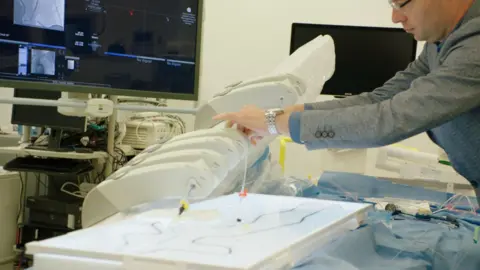
The lead researcher said the experiment showed a robot could be linked with the identical medical instruments a specialist would conventionally utilize, and a healthcare professional who is attending the case could simply attach the instruments.
The expert, in a separate site, could then hold and move their individual tools, and the automated system then performs precisely identical actions in live timing on the subject to carry out the thrombectomy.
The subject would be in a hospital operating room, while the doctor could perform the surgery via the automated equipment from anywhere - even their personal residence.
The lead researcher and the American specialist could view real-time imaging of the specimen in the experiments, and track developments in real time, with the lead researcher explaining it took just a brief period of preparation.
Tech giants prominent manufacturers were participated in the research to ensure the communication link of the mechanical device.
"To operate from the America to Britain with a brief latency - an instant - is truly remarkable," commented the neurosurgeon.
Innovations in cerebral healthcare
Prof Grunwald, who has received recognition for her work and is also the vice president of the international medical organization, stated there were primary challenges with a traditional procedure - a worldwide deficiency of specialists who can conduct it, and intervention relies upon your geographical position.
In the region, there are just three locations people can receive the procedure - urban centers. If you don't live there, you must travel.
"The treatment is extremely time-critical," said Prof Grunwald.
"Each six-minute postponement, you have a 1% less chance of having a positive result.
"This technology would now offer a innovative method where you're not depending on where you reside - conserving the crucial moments where your brain is otherwise dying."
Public health data revealed there were {9,625 ischaemic strokes|numerous cerebral events|


